
News & Updates
AI-Powered Blood Test May Improve Dementia Diagnosis
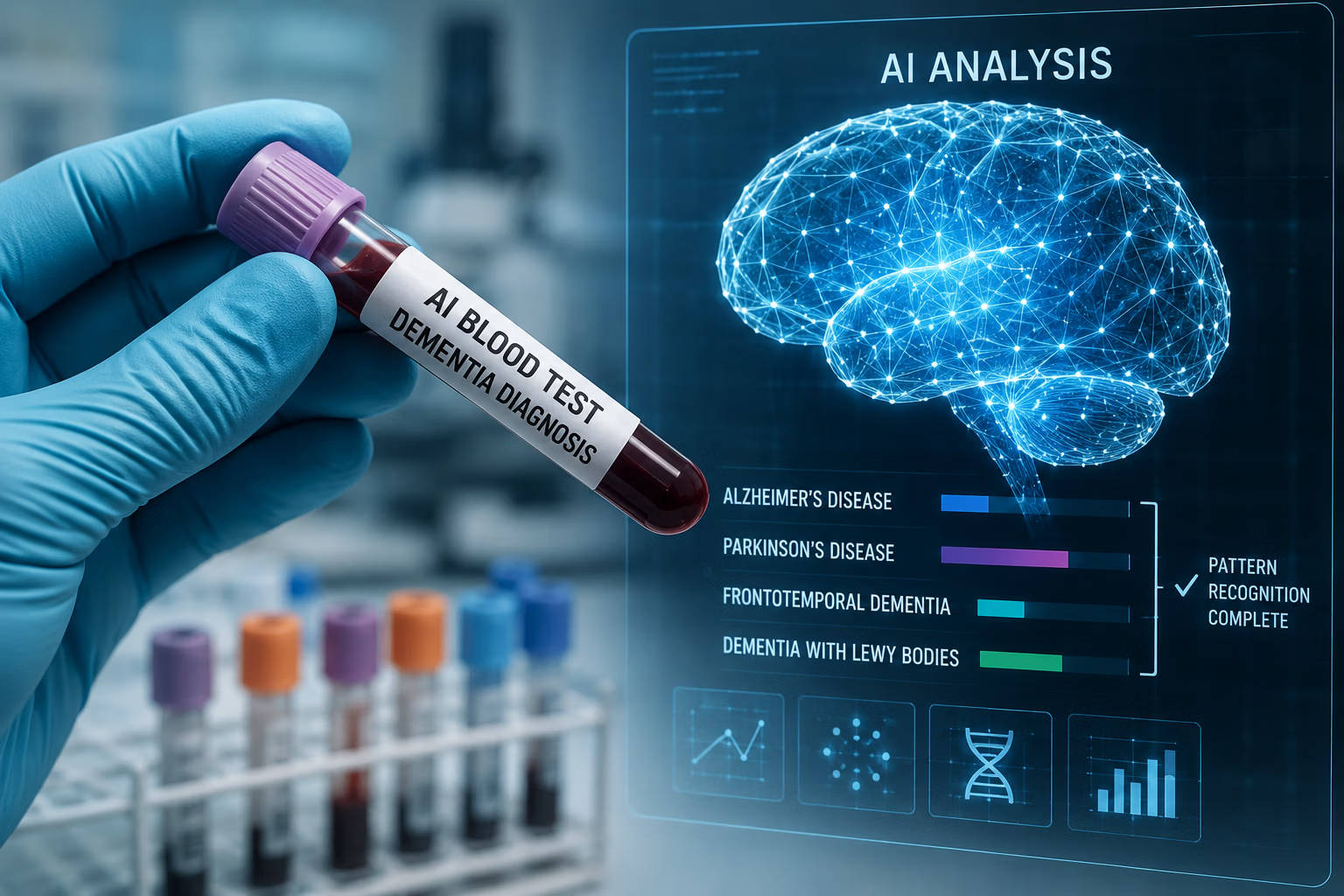
Researchers at Washington University School of Medicine in St. Louis have developed a promising new blood test that uses artificial intelligence to help distinguish among several neurodegenerative diseases, including Alzheimer’s disease, Parkinson’s disease, frontotemporal dementia, and dementia with Lewy bodies.
Diagnosing the cause of cognitive decline can be challenging because many neurodegenerative diseases share similar symptoms, particularly in their early stages. Memory loss, confusion, changes in behavior, and movement disorders often overlap, making it difficult for physicians to determine the underlying condition.
The new approach combines blood-based biomarkers with artificial intelligence to identify patterns associated with specific diseases. According to the research team, the system was able to distinguish among multiple neurodegenerative disorders and identify cases in which more than one disease process may be contributing to a patient’s symptoms.
While additional research and clinical validation are still needed, the findings highlight the growing role of blood-based testing in dementia care. Traditionally, diagnosis has often relied on PET imaging, spinal fluid analysis, neurological evaluations, and other specialized testing. Blood-based biomarkers have the potential to provide clinicians with another tool for evaluating patients and determining when additional testing may be appropriate.
Researchers believe advances in biomarker testing could help improve diagnostic accuracy, support earlier identification of disease, and increase access to specialized care and clinical trials.
As the field continues to evolve, blood testing is increasingly viewed as one of the most significant developments in dementia diagnosis in recent years.
Sources:
Washington University School of Medicine, “Blood Test Powered by AI Could Transform Diagnosis of Dementia,” May 2026.