
News & Updates
Technology, Dignity, and Independence: A Conversation About the Future of Aging in Place
by Chris Nakea
Vice Chair & Public Image Officer, ADRAG
One of the greatest challenges facing families affected by Alzheimer’s disease and other forms of dementia is finding ways to help loved ones remain independent while ensuring their safety and well-being.
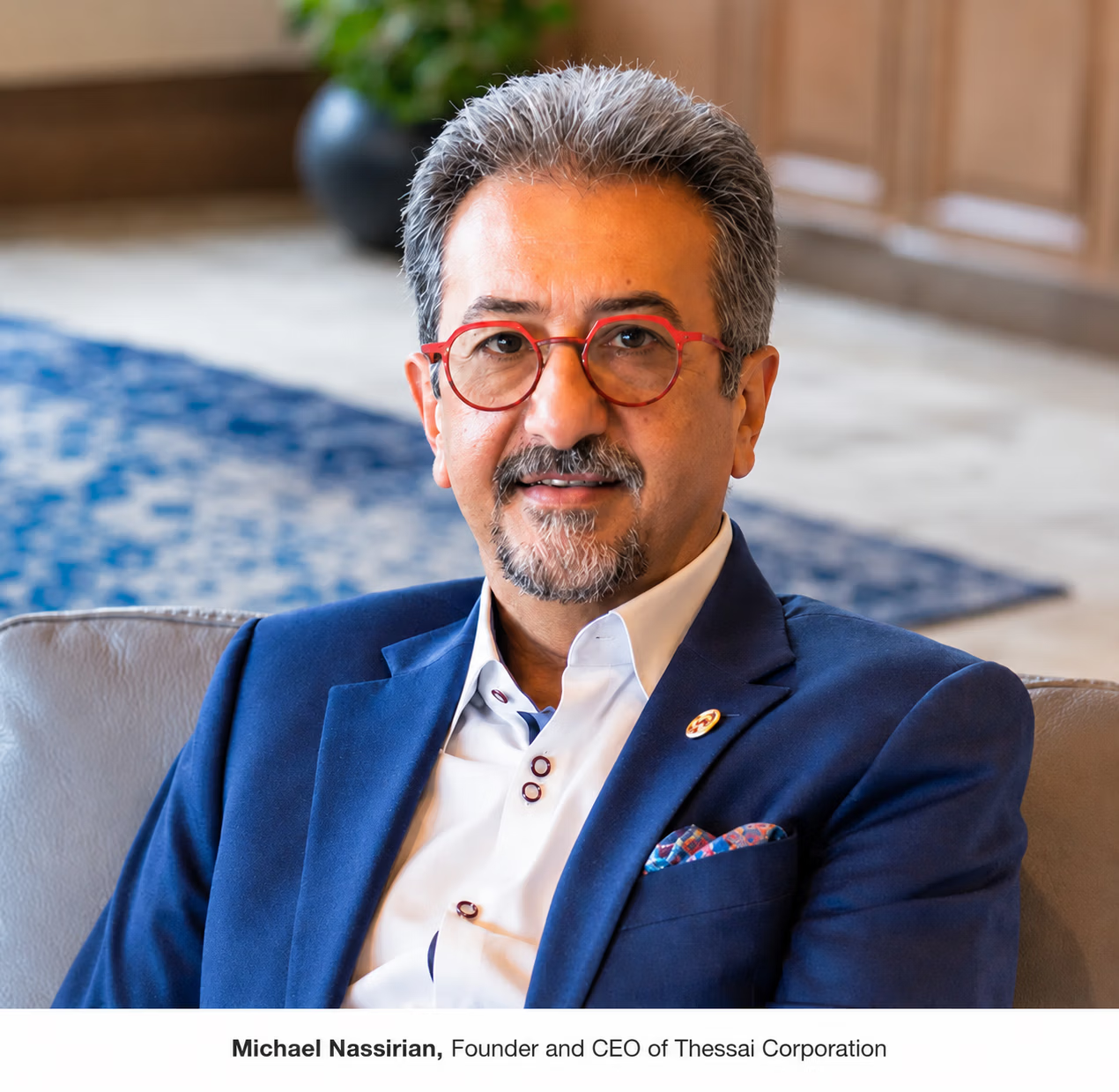
Recently, I had the opportunity to sit down for coffee with Michael Nassirian, Founder and CEO of Thessai Corporation, a Seattle-based HealthTech and Artificial Intelligence company developing innovative technologies designed to support aging in place and proactive wellness monitoring.
What immediately caught my attention was not simply the technology itself, but the story behind it.
The inspiration for Thessai came from Michael’s personal experience helping care for an aging family member. Witnessing the challenges families face balancing safety, independence, and privacy led him to envision a different approach—one that could provide meaningful support without intrusive surveillance.
Our conversation centered around a question many families face every day:
“How can we provide greater safety and support without sacrificing privacy, dignity, and independence?”
For many seniors, the idea of constant monitoring can feel intrusive. Traditional systems often rely on cameras, microphones, wearable devices, or continuous cloud-based surveillance. While these tools can provide valuable information, they can also raise concerns about privacy and personal autonomy.
Thessai is taking a different approach.
Their platform utilizes a combination of ambient environmental sensors, edge-based artificial intelligence, and privacy-preserving analytics to understand daily behavioral patterns without the use of cameras, microphones, or wearable devices.
Rather than monitoring people, Thessai monitors patterns—using artificial intelligence to identify meaningful changes while preserving privacy, dignity, and independence.
By learning an individual’s normal routines and activity levels, Thessai’s technology can identify meaningful changes that may warrant additional attention from family members, caregivers, or healthcare professionals.
Imagine a system that notices subtle changes in movement throughout the home, disruptions in sleeping patterns, or deviations from normal daily routines that may signal a need for closer observation or support.
This type of early awareness could be particularly valuable for families supporting individuals living with Alzheimer’s disease or other dementias, where changes often occur gradually and can be difficult to recognize in their earliest stages.
For caregivers supporting a loved one living with Alzheimer’s or dementia, one of the greatest challenges is balancing safety with independence. Knowing when a meaningful change in routine has occurred—without intruding on privacy—could provide an additional layer of support while allowing individuals to maintain dignity and autonomy.
For families who may live across town—or across the country—having visibility into changes in daily routines can provide valuable peace of mind while respecting a loved one’s independence.
What impressed me most during our discussion was Thessai’s commitment to privacy.
The company intentionally avoids video surveillance and audio recording. Instead, its technology focuses on behavioral intelligence and environmental awareness, creating what Michael describes as a more respectful and dignified approach to monitoring and support.
The platform combines sensors, local edge computing, AI processing, caregiver dashboards, mobile applications, and alert systems into a single integrated care solution. Because much of the intelligence is processed locally rather than relying entirely on cloud-based systems, the approach offers both responsiveness and enhanced privacy protections.
Today, Thessai is conducting pilot programs in the United States, Spain, and Singapore, working with care providers and senior living organizations to evaluate how privacy-first monitoring can improve safety and support aging in place.
While technologies like these are not a replacement for caregivers, family involvement, or professional healthcare, they may become valuable tools that help families extend independence, improve safety, and gain earlier visibility into changing conditions.
As ADRAG continues its mission of raising awareness, supporting caregivers, advocating for those affected by Alzheimer’s and dementia, and exploring innovative solutions, it is encouraging to see companies like Thessai working to address some of the most pressing challenges associated with aging populations.
The future of dementia care will require collaboration among healthcare providers, researchers, caregivers, community organizations, technology innovators, and advocates. Conversations like the one I had with Michael remind us that meaningful innovation often begins with a simple goal: helping people live safer, healthier, and more independent lives.
As populations age worldwide and caregiver shortages continue to grow, solutions that combine compassion, privacy, and intelligent technology may play an increasingly important role in helping older adults remain safely and independently in the homes and communities they love.
As technology continues to evolve, ADRAG will remain committed to exploring and sharing innovations that have the potential to improve the lives of individuals living with Alzheimer’s disease, dementia, and related cognitive conditions.
To learn more about Thessai Corporation and its privacy-first approach to intelligent care environments, visit www.thessai.com, call 1-888-450-8111, or email info@thessai.com.